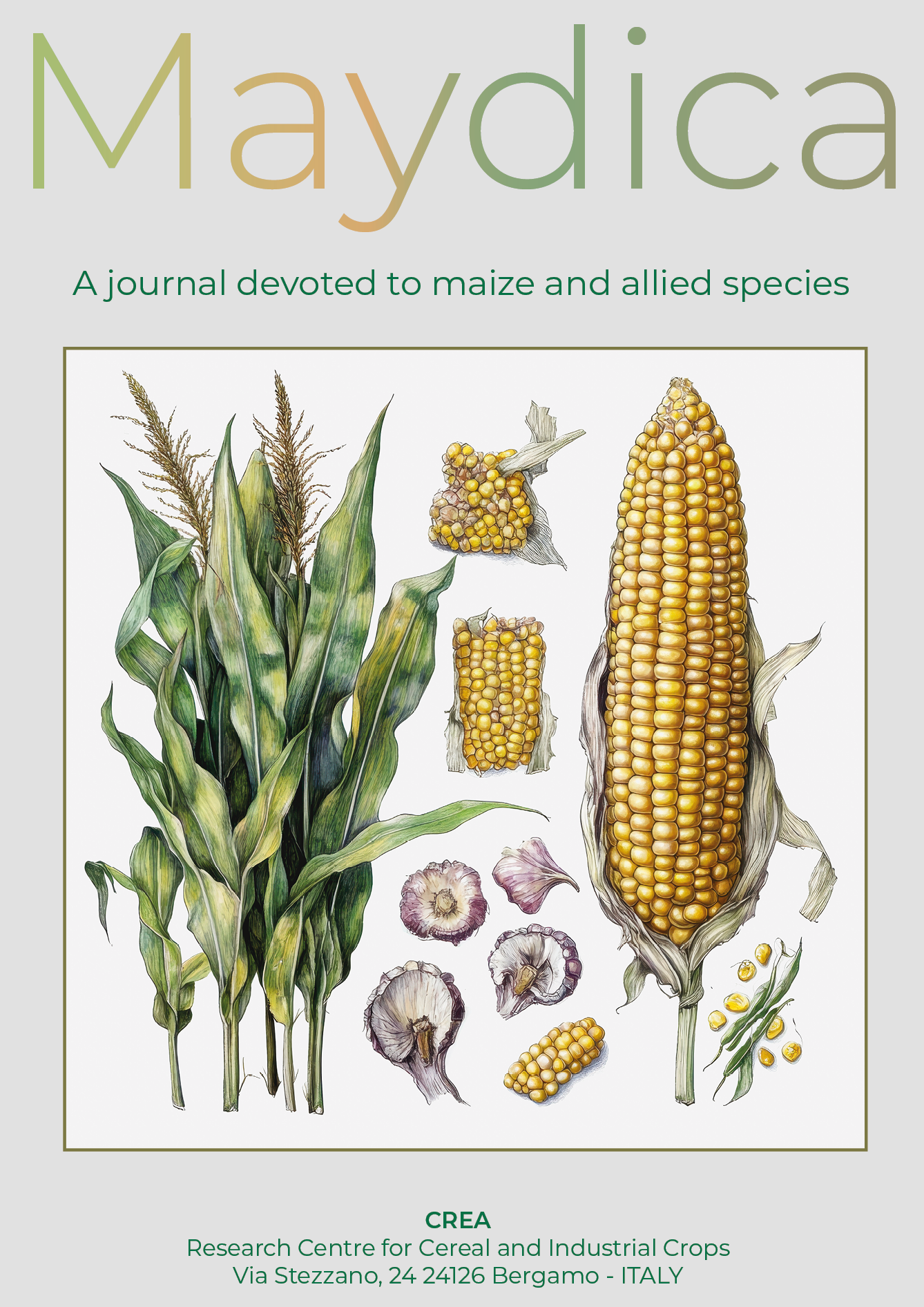
Agronomic Performance and Grain Yield of Mexican Purple Corn Populations from Ixtenco, Tlaxcala
Keywords:
Zea mays L., purple corn, landraces, grain yield, agronomic performance, and San Juan Ixtenco, TlaxcalaAbstract
Corn is a crop with an enormous potential for the extraction of anthocyanins which, given their bioactive propertiesand their ability to act as a natural dye, nowadays are a secondary metabolite of wide interest. In Mexico,
several variants of corn that accumulate this flavonoid have been found among corn landraces of blue, red, pink,
purple or black kernels. Its grain yield potential and agronomic traits have not been widely documented. Since
San Juan Ixtenco, Tlaxcala, preserves the "maíces morados" variant (purple corn) and other variants of colored
kernels, in this research the grain yield and agronomic performance of 53 corn populations (landraces and some of
them at an early stage of breeding) were evaluated at three locations in order to assess quantitatively those traits.
Most populations were of pigmented kernels and yielded between 4494 to 882 kg ha-1, they had a late-male
flowering period (105 to 90 days to anthesis) and were of intermediate height (plant height from 254 to 176 cm).
When purple corn landraces from Ixtenco were produced under environmental conditions different from those of
their place of origin, they suffered maladaptation, complications for the establishment and incidence of ear rot,
which reduced their grain yield potential. Despite this situation, 10 purple corn landraces from Ixtenco identified
as 38, 8, 34, 39, 13, 3, 4, 1, 9 and 18 were outstanding by their grain yield, agronomic traits and their remarkable
capacity to accumulate anthocyanins into the kernel and/or the corncob.
Downloads
Published
2020-01-31
Issue
Section
Articles